
What does the nanometre in a laboratory transistor actually measure?
| Reference | Dimension |
|---|---|
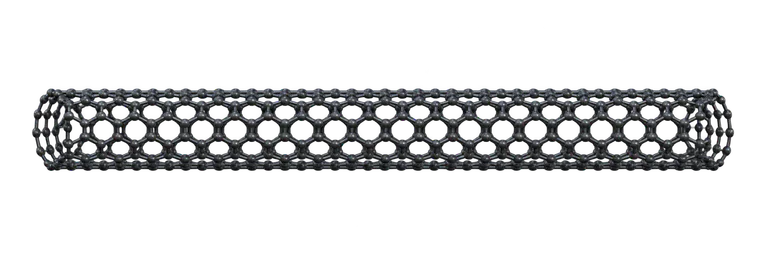
| Experimental transistor · 1 nm nanotube gate | 1 nm gate nanotube diameter ≈ 1 nm |
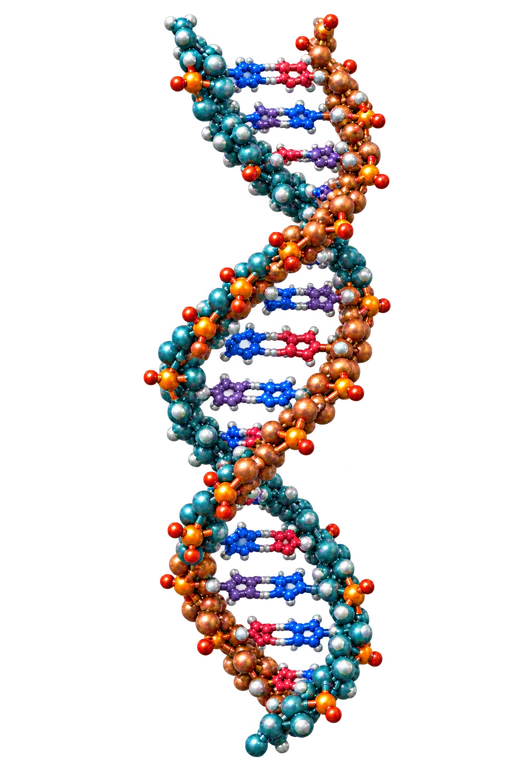
| DNA | 2 nm double-helix diameter |
Calculation: 2 nm ÷ 1 nm, after conversion into the same unit. The ratio calculated from the catalogue data is about 2.
Both illustrations use a common factor for the stated dimension. Positions aid reading and do not represent physical separation.
The contacts and complete device are larger than this gate. This is a laboratory result, not a current record or a commercial 1 nm chip. The illustrated lengths of the nanotube and DNA are not the dimensions compared.
Check the conventions
Experimental transistor · 1 nm nanotube gate
2016Demonstration
In 2016, Berkeley researchers demonstrated a molybdenum disulfide transistor using a carbon nanotube approximately 1 nm in diameter as its gate. The nanometre refers to this gate dimension: the entire transistor and its contacts are much larger. The image represents only the nanotube; its vertical diameter is compared and its length is symbolic. This is a laboratory result, not the size of a commercial chip or a claim to a current record.
Berkeley Lab announcement consulted on 30 October 2026: a 1 nm carbon-nanotube gate, demonstrated in 2016. The dimension refers to the gate, not the complete transistor.
DNA
Two complementary strands carry genetic information. Displayed dimension: diameter of the double helix.
Catalogue value to check against the source; not individually audited.
Choose another reference
Replace an object in the explorer, keep the common scale factor and try predicting the new ratio before reading it.
Open the comparison →