
What does this number measure?
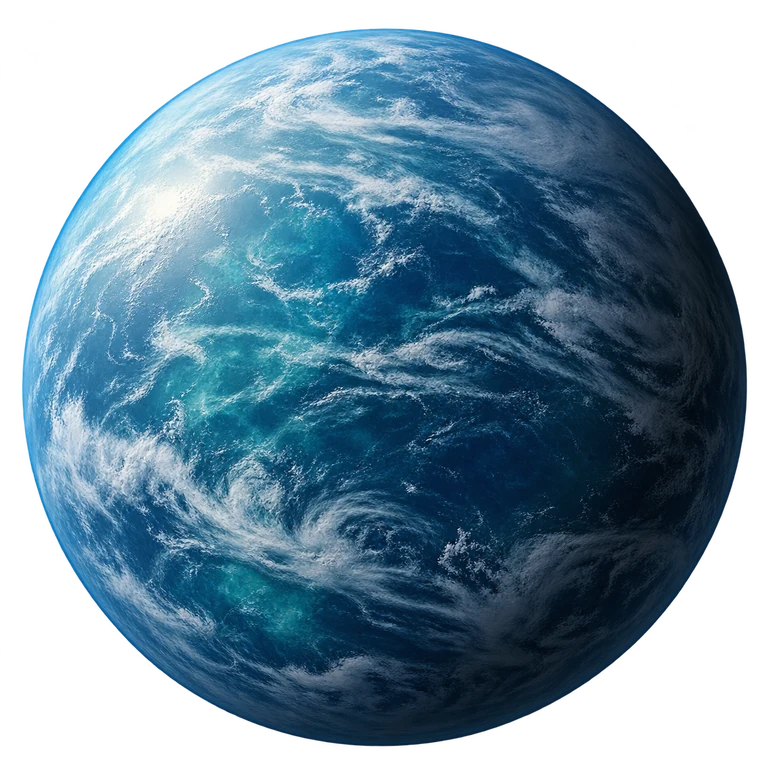
The NASA entry, updated in July 2025, gives a radius of 2.1 Earth radii. The ratio is the same for diameters: 2.1 × 12 742.0168 km, or about 26 800 km. The 2011 discovery value of 2.38 Earth radii is a different historical solution and is not used here. The ocean, colours, clouds and surface in this illustration are imagined; a drawing proves neither liquid water nor habitability.
Compare the stated dimensions
The comparison uses the number in each fact sheet: altitude, height, diameter, length or distance, depending on the reference. Two values in metres do not necessarily describe the same property.
Source and limitations
Rounded documented ratio, dependent on transits and the stellar model; different solutions have been published. The precision of the conversion calculation is not the precision of the measurement.
The globe's diameter is calibrated to the documented ratio to Earth's diameter. Colours, surface and clouds are entirely imagined; this is not a photograph of Kepler-22 b.