
What does this number measure?
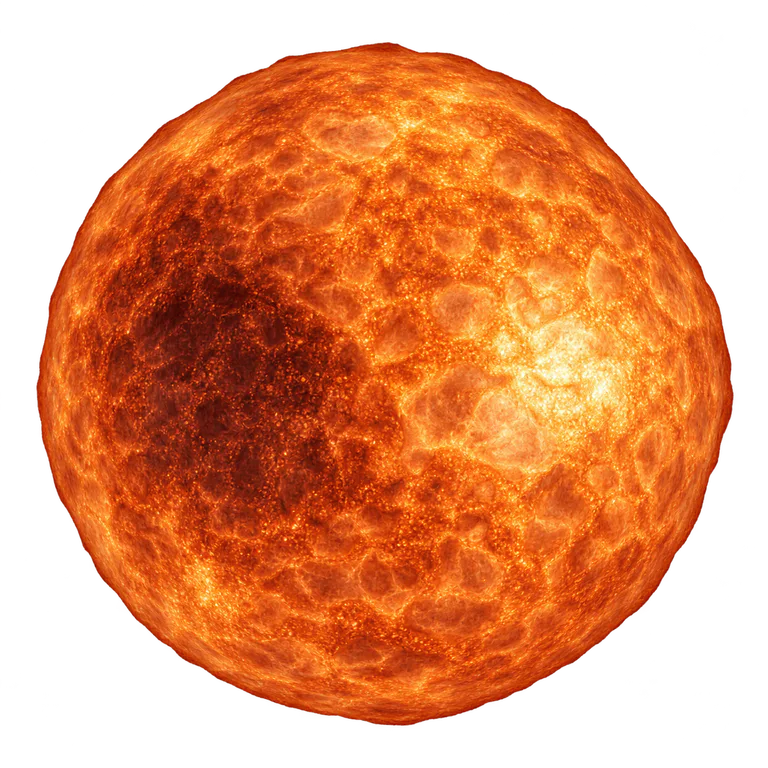
A variable red supergiant, also catalogued as HD 206936. The depicted disc represents the diameter, twice the adopted radius of 1420 nominal solar radii (1 nominal solar radius = 695 700 km). The value is a dated estimate, not an established size record. Historical estimate from Levesque et al. (2005), Table 4; the authors give a radius uncertainty of about 20 %. Later studies may give a different value. A 2026 study adopts about 762 solar radii, so its ranking depends on the assumptions and study used.
Compare the stated dimensions
The comparison uses the number in each fact sheet: altitude, height, diameter, length or distance, depending on the reference. Two values in metres do not necessarily describe the same property.
Source and limitations
Historical estimate from Levesque et al. (2005), Table 4; radius uncertainty is approximately 20 % according to the authors. Later studies may give a different value. A 2026 study adopts approximately 762 solar radii: the ranking therefore depends on the assumptions and the study selected.
Mu Cephei: artistic illustration of a stellar photosphere. A shared generic pattern for comparing diameters, not a photograph or a reconstruction of this star. The value and its uncertainties come from the fact sheet.