
What does this number measure?
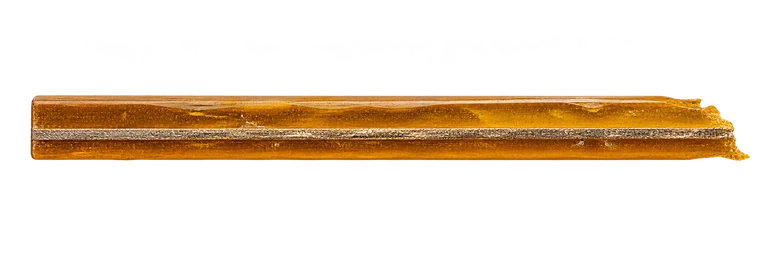
Neuralink's paper published in 2019 describes polymer probe threads containing conductors and insulators. Their total nominal thickness is 4 to 6 µm. To place this detail in the atlas, we choose 5 µm, the midpoint of that range: it is not an exact measurement of an individual thread. Only the cross-section's thickness follows this dimension. The illustrated lateral length shows the layers; it does not represent the complete thread length, given as typically 20 mm in the paper. The width, published as between 5 and 50 µm depending on the design, is another dimension again. This reference concerns the experimental platform of 2019, not the dimensions of the current N1 implant or a transistor gate. It does not establish medical effectiveness.
Compare the stated dimensions
The comparison uses the number in each fact sheet: altitude, height, diameter, length or distance, depending on the reference. Two values in metres do not necessarily describe the same property.
Source and limitations
Published nominal range of 4 to 6 µm, not a confidence interval. The 5 µm value is a declared comparison convention; the drawing is neither a micrograph nor an entire thread reduced to that dimension. Experimental 2019 version.
Interpreted local cross-section of an experimental Neuralink thread from 2019. Only the vertical thickness is calibrated to a representative value of 5 µm; the lateral width and length of this fragment are illustrative. It is neither the complete thread nor a current N1 implant.
Publication of the experimental demonstrator: 2019.